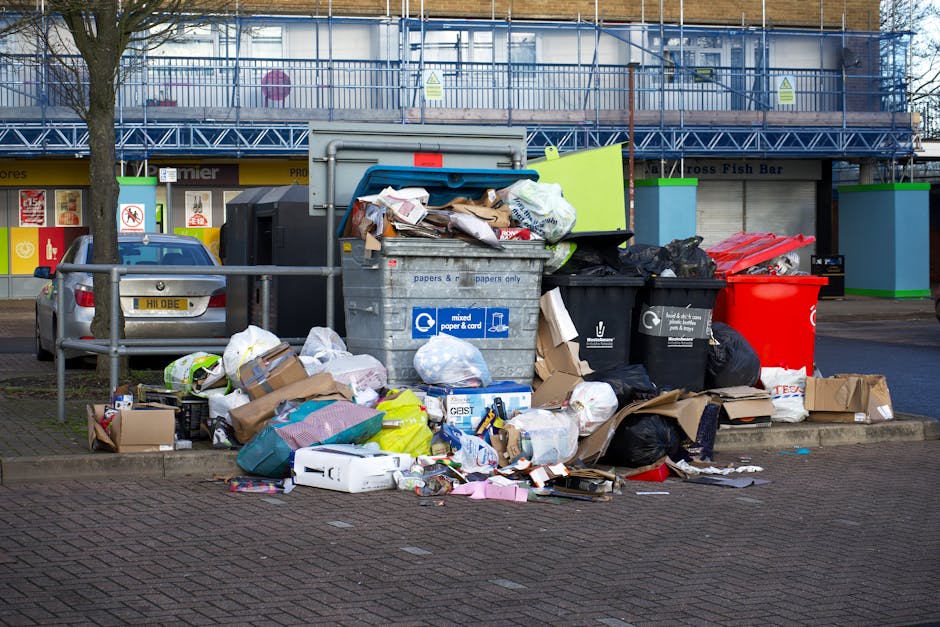
Avoid hidden rubbish removal charges in Mill Hill Barnet
If you've ever booked waste clearance and then felt that uneasy little wobble when the final bill arrived, you're not alone. Hidden rubbish removal charges can turn a simple job into an expensive headache, especially when you're trying to keep things moving in Mill Hill Barnet and don't have time for back-and-forth surprises. The good news? With the right questions, a clear scope, and a bit of know-how, you can usually spot the red flags before anyone turns up at the door.
This guide is built to help you avoid hidden rubbish removal charges in Mill Hill Barnet by showing you what to check, what to ask, and how proper pricing should work in practice. We'll cover the common extras, the local factors that affect cost, and the simple steps that keep your quote honest. No fluff. Just the things that actually save money and stress.
Table of Contents
- Why it matters
- How rubbish removal pricing works
- Key benefits and practical advantages
- Who this is for and when it makes sense
- Step-by-step guidance
- Expert tips for better results
- Common mistakes to avoid
- Tools, resources and recommendations
- Law, compliance, standards, or best practice
- Options, methods, or comparison table
- Case study or real-world example
- Practical checklist
- Conclusion
- Frequently asked questions
Why Avoid hidden rubbish removal charges in Mill Hill Barnet Matters
Hidden charges are rarely dramatic in the moment. That's the tricky part. A small "admin fee" here, a staircase surcharge there, then a last-minute price jump because the waste was "heavier than expected". Before you know it, the job costs far more than you planned. In a place like Mill Hill Barnet, where homes, flats, gardens, and mixed commercial spaces can all create different waste profiles, pricing should be clear from the outset.
Truth be told, most people are not trying to shop for the absolute cheapest rubbish removal. They just want fair, clear pricing with no awkward surprises at the kerbside. And that is a reasonable expectation. If a provider cannot explain how their quote is built, how they assess volume, or what counts as an extra, you're already on shaky ground.
It matters even more when you're dealing with time pressure. Think about a garage that has to be cleared before a house sale, a mattress and sofa removal after a move, or builders' waste that needs shifting before the next trade arrives. One bad pricing surprise can throw the whole schedule off. That is exactly the kind of thing people want to avoid.
If you're comparing services, it can help to look at a provider's wider approach too. Pages such as pricing and quotes and payment and security are often where the real story sits, not just the marketing copy on the homepage.
How Avoid hidden rubbish removal charges in Mill Hill Barnet Works
At its simplest, transparent rubbish removal should work like this: you describe the waste, the provider estimates the load, and the price reflects the actual job. Sounds straightforward, right? Yet hidden fees creep in when the description is vague, the collection conditions are not discussed, or the provider uses a low headline price to hook interest and then adds extras later.
Most reputable rubbish removal quotes are shaped by a few practical factors:
- Volume of waste - how much space the items take in the vehicle.
- Type of waste - general household waste, bulky items, garden waste, appliances, or materials that need special handling.
- Access - stairs, narrow hallways, distance from the vehicle, parking restrictions, and whether the team has to carry items a long way.
- Labour time - how many people are needed and how long the job will take.
- Disposal route - recycling, reuse, landfill, transfer stations, or specialist disposal.
Where people get caught out is in the details. A quote may sound fine until the team arrives and says, "Actually, there's an extra charge because the waste is in the loft," or "That appliance needs a special disposal fee." Now, some of those charges may be legitimate. But they should be clear before anyone lifts a thing. That's the key difference.
When you book a proper service, you should expect a sensible process: inspection or photo assessment, clear explanation of what is included, and straightforward confirmation of any extras before collection. A provider that works this way is usually easier to trust, full stop.
Key Benefits and Practical Advantages
Keeping rubbish removal pricing transparent does more than protect your wallet. It makes the whole job smoother. Less arguing, less uncertainty, less last-minute faff. That alone is worth a lot when you've already got a house move, renovation, or clearance project on your plate.
Here are the main advantages of avoiding hidden charges:
- Better budgeting - you can plan the real cost, not just the teaser rate.
- Fewer delays - no stopping the job to renegotiate on the driveway.
- Less stress - clear expectations make a messy task feel manageable.
- Improved trust - providers that price clearly tend to communicate more clearly overall.
- Cleaner comparisons - you can compare like-for-like rather than falling for a cheap headline number.
There's also a practical side that people sometimes miss: accurate pricing often means more accurate service. If the provider has asked the right questions, they're more likely to send the right vehicle and enough staff. That reduces the "sorry, we'll need to come back" problem, which is never fun and always inconvenient.
Expert summary: the cheapest quote is not always the best value. The best value is the quote that is clear, specific, and actually covers the work you need done.
And yes, that may sound obvious. But when you're standing in front of a pile of old furniture, garden cuttings, or builders' rubble, obvious tends to vanish quite quickly.
Who This Is For and When It Makes Sense
This advice is useful for anyone arranging waste clearance in Mill Hill Barnet, but it is especially helpful if your job has more than one type of item, awkward access, or a deadline. Let's face it, that's most jobs.
You'll benefit most if you are:
- A homeowner clearing a loft, garage, or garden.
- A tenant moving out and trying to leave the place tidy.
- A landlord dealing with a flat clearance between tenancies.
- A small business owner clearing office, retail, or storage waste.
- A tradesperson managing builders' waste from a renovation or repair.
- Someone dealing with bulky items such as sofas, mattresses, fridges, or broken appliances.
It makes particular sense when the waste is not neatly stacked in bags by the door. If it's spread across rooms, tucked into an attic, or packed into a garden corner after a few weekends of "I'll sort that later", the pricing can be more complicated. Not impossible. Just more reason to be precise.
If you are sorting a broader clearance, internal pages such as house clearance, home clearance, and garage clearance can help you understand how different job types are usually handled.
Step-by-Step Guidance
Here's a simple process to help you avoid hidden rubbish removal charges in Mill Hill Barnet. Keep it practical. Keep it specific. That is where the savings usually are.
- List everything that needs removing. Be honest and detailed. One chair is not the same as a chair, table, carpet roll, and three bin bags.
- Take clear photos. Wide shots and close-ups help. If there's awkward access, photograph that too. A dark loft ladder or a narrow passageway matters more than people think.
- Ask what is included. Labour, loading, disposal, recycling, VAT if applicable, and any minimum charge should all be clear.
- Ask what could cost extra. Stairs, long carry distances, heavy single items, restricted parking, hazardous materials, special appliances, or mixed waste can all change the price.
- Confirm the price basis. Is it volume-based, item-based, time-based, or a fixed quote? If it is estimated, ask what could change it.
- Check disposal expectations. Good operators should be able to explain whether items will be reused, recycled, or sent for disposal.
- Get the agreement in writing. Even a short confirmation by email or booking message helps avoid disputes later.
- Be on site, if you can. A quick walk-through can prevent misunderstanding. And if you're not there, make sure someone can answer questions.
A small but important detail: if you've got something unusual, say so early. A fridge tucked behind a shed, a heavy treadmill in a basement, or broken plasterboard from a DIY project can change the setup. A five-minute conversation now can save a thirty-minute argument later. Nobody wants the awkward doorstep pricing chat. Nobody.
Expert Tips for Better Results
In our experience, the clearest jobs are usually the cheapest jobs in real terms, even if the headline quote looks a touch higher. That's because clarity reduces wasted time, and wasted time is where hidden costs like to sneak in.
Here are a few expert habits worth adopting:
- Use exact item descriptions. Say "two-seater sofa and one armchair" rather than "some furniture".
- Flag access issues early. Mention top-floor flats, long driveways, locked gates, or no parking nearby.
- Separate ordinary waste from specialist waste. That way you are not guessing what may be chargeable.
- Ask for a collection window and process. Good timing matters, especially if you are juggling builders, agents, or family members.
- Compare total value, not just price. A slightly dearer quote may include loading, labour, and disposal that another quote leaves out.
Another practical tip: if you are clearing a room with mixed contents, group the items into categories before you ask for a quote. For example, furniture, cardboard, garden waste, and appliance removal may each need different handling. This is especially helpful when you want to keep the final bill tidy and avoid the "well, that's not what I meant" moment.
And one more thing - do not be embarrassed to ask basic questions. Really. Any provider worth using should be able to explain the job without making you feel silly.
Common Mistakes to Avoid
A lot of hidden charges come from a handful of predictable mistakes. Once you know them, they're easier to sidestep.
1. Accepting a vague "from" price
A low "from" price can be useful as a starting point, but only if you understand what affects the final figure. If the quote is too vague, it's basically a gamble.
2. Forgetting to mention awkward access
Stairs, basements, narrow hallways, and limited parking can all affect the labour involved. It's better to sound over-specific than to be under-informed.
3. Assuming all waste is treated the same
It isn't. General junk, green waste, bulky furniture, appliances, and potentially hazardous items may each need different handling. That's where extra fees often appear.
4. Not asking about minimum charges
Sometimes a small load still has a base cost. That is normal in many cases, but you should know it before booking.
5. Forgetting to ask about VAT or card charges
These details can change the final total. If they are not mentioned upfront, ask. Simple as that.
6. Leaving the quote details in your head
Memory is a funny thing. It feels reliable right up until it isn't. A written confirmation is always safer.
There's a certain relief in having everything pinned down before the van arrives. You can almost feel your shoulders drop. That's what a good booking should do.
Tools, Resources and Recommendations
You do not need fancy tools to avoid hidden rubbish removal charges, but a few basic things make a real difference. Most of them are already on your phone.
- Camera or phone photos - show the waste clearly and from several angles.
- Simple item list - note the type and approximate quantity of each item.
- Measuring tape - useful for large furniture or tight access points.
- Access notes - stairs, parking restrictions, or distance from the road.
- Written quote or booking summary - keep the agreed terms in one place.
If you are dealing with a specific type of rubbish, it can help to read a relevant service page before you book. For example, furniture clearance, fridge and appliance removal, and garden clearance are all useful starting points when your load is not just general household waste.
If you are comparing providers, also look at how they present company information and policies. Pages such as about us, health and safety policy, and insurance and safety can tell you quite a bit about how seriously they treat the work. Not glamorous, maybe, but very useful.
Law, Compliance, Standards, or Best Practice
When waste is collected, there is more to think about than just price. In the UK, waste handling should be done responsibly and in line with accepted legal and environmental expectations. You do not need to become a compliance expert, but you do need to be careful about who is removing your waste and where it ends up.
At a practical level, that means asking whether the provider handles waste lawfully, uses appropriate disposal routes, and follows safe working practices. If a service sounds suspiciously cheap, ask yourself why. Are they including disposal properly? Are they insured? Are they clear about what happens to the waste after it leaves your property?
Best practice in rubbish removal usually includes:
- Clear pricing before collection.
- Responsible segregation where practical.
- Safe manual handling.
- Proper treatment of items that need special care.
- Transparent booking terms and complaint handling.
For specialist items, the bar is higher. Hazardous waste, certain electrical items, and contaminated materials need particular care. If you are unsure whether something is suitable for standard collection, check first rather than hoping for the best. Hope is not a compliance strategy. Bit of a shame, but there it is.
You can also review related policy pages like hazardous waste disposal, recycling and sustainability, and what can go in a skip to get a clearer sense of what may or may not be suitable for your job.
Options, Methods, or Comparison Table
Different rubbish removal methods suit different situations, and understanding the trade-offs helps you avoid paying more than you should. The right choice depends on the size of the job, access, urgency, and how much sorting you want to do yourself.
| Option | Best for | Pros | Possible downsides |
|---|---|---|---|
| One-off rubbish removal | Mixed household or bulky items | Quick, flexible, minimal effort | Can cost more if the load is not described clearly |
| Furniture or appliance-specific removal | Single large items | Simple pricing for known items | Extras may apply if access is awkward |
| Full property clearance | House, flat, or estate clearances | Good for large volumes and whole-room jobs | Needs more detailed quotation and planning |
| Builder's waste clearance | Renovation or trade waste | Useful for heavier, ongoing work | Material type and weight can affect price |
| Garden clearance | Green waste and outdoor clutter | Fast way to reclaim outdoor space | Wet soil, branches, or mixed waste can alter cost |
If you are on the fence, ask yourself one simple question: do you want the cheapest quote, or the clearest quote? For most people, the second one ends up being better value. Particularly if you are clearing a place while the kettle is boiling, the bin bags are multiplying, and the day is getting away from you.
Case Study or Real-World Example
Imagine a typical Mill Hill Barnet situation: a family clears out a garage before a house sale. At first glance, it looks straightforward - a few boxes, an old sofa, some broken shelving, a bike, and garden clippings. The first quote sounds attractively low, but it is based on "standard access only" and does not mention stair carry, mixed waste, or a minimum charge for bulky items.
When the provider arrives, they discover the sofa is in a back room, the bike is boxed up with other scrap metal, and the garden waste is wetter and heavier than expected after a few damp days. The price rises. Not wildly, perhaps, but enough to sting.
A better approach would have been:
- Share photos of the garage contents.
- Explain that some items are in the back of the house.
- Ask whether mixed loads change the quote.
- Confirm whether the sofa and garden waste are charged differently.
- Get the final price in writing before the team arrives.
The real lesson? The job itself was never the problem. The pricing clarity was. Once the load is accurately described, these surprises usually shrink or disappear. That's the bit people often learn the hard way, after a slightly awkward phone call and a stronger cup of tea.
Practical Checklist
Use this checklist before you book rubbish removal in Mill Hill Barnet. It takes a few minutes and can save a lot of hassle.
- Have I listed every item that needs removing?
- Have I taken clear photos from more than one angle?
- Have I explained access issues, stairs, parking, or long carry distances?
- Have I asked what is included in the quote?
- Have I asked what could trigger extra charges?
- Do I know whether the quote includes labour, loading, disposal, and VAT if applicable?
- Have I checked whether any items need specialist handling?
- Have I asked how the waste will be processed or disposed of?
- Have I got the final agreement in writing?
- Do I feel comfortable that the price is clear and fair?
If you can tick most of those boxes, you are in a much stronger position. If you can't, pause and ask more questions. Honestly, that pause is often the difference between a smooth collection and a surprise bill.
Conclusion
To avoid hidden rubbish removal charges in Mill Hill Barnet, the key is simple: be specific, ask direct questions, and make sure the quote reflects the real job rather than a best-case guess. Clear pricing protects your budget, saves time, and makes the whole process feel a lot less stressful.
Whether you are clearing a single bulky item, a packed garage, or a full property, the same rule applies. The more precise the information, the more reliable the price. And if a provider is open, patient, and willing to explain how the quote works, that is usually a very good sign.
Get a free quote today and see how much you can save.
Sometimes the best outcome is simply no surprises, no fuss, and one less thing hanging over your head. That peace of mind counts for quite a lot.
Frequently Asked Questions
How can I tell if a rubbish removal quote has hidden charges?
Look for vague wording, missing inclusions, and no explanation of extra fees. A clear quote should state what is covered, what could change the price, and whether labour, disposal, or VAT are included.
What are the most common hidden rubbish removal charges?
The usual extras are stair carry fees, long carry distances, appliance disposal charges, minimum load charges, restricted access charges, and fees for special or hazardous waste. Some are legitimate, but they should be disclosed upfront.
Is the cheapest quote always the worst choice?
Not always, but a very cheap quote can be a warning sign if it lacks detail. A fair quote with clear terms is often better value than a low teaser price that rises later.
Should I send photos before booking rubbish removal?
Yes, if possible. Photos help the provider assess volume, access, and item type. They are one of the easiest ways to reduce the risk of pricing disputes.
Do I need to mention access issues like stairs or parking?
Absolutely. Access affects how long the job takes and how easy it is to move the waste. If you leave this out, the quoted price may not reflect the real work involved.
Are bulky items charged differently from general waste?
Often, yes. Sofas, mattresses, fridges, and other large items may need different handling or disposal routes. That does not automatically mean a higher price, but it should be confirmed in advance.
Can rubbish removal prices change on the day?
They can, if the waste is not as described. That is why clear photos, accurate item lists, and written confirmation matter so much.
What should be included in a good rubbish removal quote?
A good quote should cover loading, labour, disposal, and any relevant taxes or fees. It should also explain anything that might trigger an extra cost, so there are no surprises later.
How do I compare rubbish removal providers fairly?
Compare total value, not just the headline price. Check what each quote includes, whether the provider explains extra charges clearly, and how they handle different waste types.
What if I have hazardous or unusual waste?
Ask before booking. Hazardous or specialist waste may require different handling, and standard collection is not always appropriate. It is much better to clarify first than to guess.
Is written confirmation really necessary?
Yes, it is worth having. A written summary of the agreed price and scope reduces misunderstandings and gives you something to refer back to if needed.
What is the best way to avoid surprise fees altogether?
Be detailed, ask direct questions, and choose a provider that explains pricing clearly. In practice, the best defence against hidden charges is a careful booking conversation at the start.